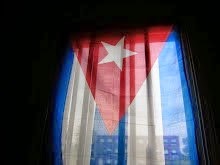
TO SADNESS
To sadness,
let it be.
Stay busy with your duties.
Coexist.
It inhabits your space
and you inhabit its own.
Do not be disturbed by its presence,
let it be.
It will leave again
in the same way
it arrived,
without asking your permission.
TO THIS FLOWER
Will I ever see you again,
or will we never meet once more?
Was all that magic from before
so fleeting, broken at its core?
Was its alchemy, woman,
a gray echo of the past?
Will I find you, at last,
on an unsuspected day?
Or must I put you away
like a dream that could not last?
Is the time of love so brief,
so measured, soon undone?
Does it die, its light outshone,
like a wave upon the deep?
Is its price—to find relief—
to languish in longing’s pain?
Is its lesson this refrain,
your vanishing trace?
Is it some star’s cruel caprice
that deprives me of all hope again?
Is it that, from not seeing you,
I slowly grow accustomed?
Is the day I now glimpse
a prelude unto death?
Is it that, in lacking you,
your image fades away?
Why did spring grant this flower
such a short-lived display?
Why does your grace miscarry,
disguised as chimera’s sway?
TO MY MOTHER AND TO MY DAUGHTER
(On a verse from Sor Juana Inés de la Cruz)
Like a book I leaf through and dust off,
your letters are phrases where I lose myself,
or read from a you that is now your memory:
it is a corpse, a shadow, nothing, dust.
Where you are without being, where your presence
astonishes, felt moving through the air,
that you who never gave consent to leave:
it is a corpse, it is dust, nothing, shadow.
I know you live; I know that death is not
entire truth, that your gaze is still the same
as the one from who never was able to see you.
Her eyes are yours, astonished.
That tomb which claims to hold you:
it is a corpse, it is dust, it is shadow, it is nothing.
FAR AWAY AND LONG AGO
Far away and long ago
I believed in truth,
and though it ill befitted my youth
I sought knowledge out of season;
love was but a pastime then,
the sea my closest friend.
I was a poor actor —and still am,
if that is what you ask—;
with my childhood, now long dead,
I left behind its warmth.
I suppose some trace remains
of who I used to be,
but autumn is a poor witness
to spring.
I wrestle with the present
my fear of mirrors;
I head toward the land of the old,
the one you never return from;
a life that once began
long ago and far away now leaves.
ANTIDOTE TO RANCOR
Rancor is a plant
that needs care;
I sow it in rich soil,
and the very prospect frightens me.
I saw your scornful grimace,
and hated you profoundly;
I saw you feign, insolent,
that my presence meant nothing,
as though you hadn’t noticed,
hemmed in by so many people.
I am stubborn—it’s evident,
or so I begin to see:
to reproach you, woman,
is a cruel trick of my mind.
I rebuke my incongruous heart
for its foolish urge to suffer,
for insisting as though it owed you
gratitude, or still could
make room for you in my life.
Better to let you die
so I can smile upon seeing you;
how much more can I lose you
if I have already seen you leave?
I must educate my feelings
and this ill-born plant
that strains to stay alive,
cut it off at the root,
sending your beloved
silhouette
straight to hell.
I SEARCH AND I DON’T
I search for you —I do not confess it,
not even to myself— but I search
for signs of you; I translate
your beloved trace and stumble,
delirious over the trail of a kiss;
I am a dream, I conquer your soul.
I am a hungry wolf, I exist
only by virtue of desire;
I scent your blood, I sniff the air,
I search and I don’t —I’m stubborn, I persist—.
I search for you; I have proof
that I have looked into your eyes;
your red lips call to me,
be it sun, clear skies, or rain.
I follow your trail, the new one,
wherever your footsteps lead.
I gather the scattered pieces,
illusion reborn;
I search, enter the fog,
draw your outlines in the air.
I search for you, constant,
along a path I invent;
at every shortcut I sense
your loving mouth will be there.
I search for another moment of you,
I clothe myself in hope;
scent, colors —I persist—;
I find you in a skein,
a cruel thread of love and complaint:
I search and I don’t —I’m stubborn, I persist—.
THE RIDE
Let your dress and lace fall to the ground,
and let desire flow like burning lava,
a conjuring breath that confirms and denies
this perpetual instant that was granted to us.
Thus my skin must have dreamed of you, while it thaws
at the voluptuous touch of your curves,
like the muffled peal from the depths,
like the fevered clapper of a longed-for wound.
Fit yourself to my body, for my flesh is ready
to be gladly devoured by yours;
I offer it to your jaws, naked and erect.
Hold fast to my hands under the starry night.
I shall be your thirsty mount for the flight;
together we shall retrace the path to heaven.
AS IN FAIRY TALES
My children,
I wish I could tell you
that good and love
will triumph
as in fairy tales,
but it is not certain,
nor does it depend
entirely on us.
What I would tell you
is not to forget
that we must live with that idea:
that good and love
deserve a place in our hearts.
Let them prevail there,
as in fairy tales,
and thus do
our part,
our small part,
the part that depends on us,
because even so, it matters.
AS AN ECHO FROM THE FUTURE
As an echo of the future
or of a distant past,
I fear I’ve already visited
the sun on its dark side;
its impure aroma intoxicated me
filling my lungs,
it contaminated my visions
with its foul and filthy stench.
I come from a profound place,
devoid of all illusions.
I was with the legions
that destroyed Carthage;
I vaguely recall
being hosted by kings
of a thousand nations,
by builders of empires.
I am a flower of the cemeteries
where men are made brothers
when the worm exults
revealing their mysteries.
I have been in the insults
that accompany the revolts,
in the dissolved nations
and in all the captivities;
I have exercised authority,
I have been acclaimed on the podium,
I have been an ungrateful custodian
disguised as a chimera.
They call me by a thousand names,
but my name is hatred.
THINGS I WILL NOT TELL MY SON
Just as you
will believe it in the future,
so too I did believe
that love could conquer all,
until they made me understand
I was mistaken
—it was a bitter draught,
though it did not kill me—.
I had to rebuild my smile,
reinvent my reasons,
and understand
that only you, both of you
would miss me,
and I had no choice
but to fill myself with courage,
forgive,
and forgive myself,
to keep on living.
OF THAT TORRID ROMANCE
I sometimes think it never happened,
so much time has passed;
perhaps I dreamed it,
or my mind invented it.
I only know we were brought together
—winter’s paradox—
by that near-eternal instant
of a torrid romance;
your farewell was an absurd trance
after the tenderest kiss.
I know well the fraternal disguise
that is but a crude illusion,
that wraps every endless longing
in unreason.
An idyll turned inferno
are your thorned petals.
You do not know, you cannot imagine
how much I could have loved you;
of you I will speak to death
if I find myself in its mists.
In the wandering hours
the days keep carving,
I find myself meeting you again,
with no room for grudge.
Thus you draw near,
stubborn love, demented love.
I know it convinces little
to say I remember you
when I neither win nor lose,
nor search for you among the crowd.
Verse that springs up with urgency
when it is no longer needed,
collecting its wage
from an impenitent sorrow.
Yesterday’s voice in my present,
a past that never passed.
From subtracting you, I remain,
unburying love:
can never truly heal
the wound that never closed.
DECLARATION OF PRINCIPLES
And yes,
I confess it in writing:
it arouses me far more
(much, much more)
to see your underwear hanging,
facing the sun,
mute witness of dampness,
perverse trigger
of unnameable fantasies,
hung out to dry with its familiar,
almost imperceptible little holes,
tiny,
indiscreet,
caused by the wear of your days
and nights,
by time
and successive rigorous rubbings
in a gray washing machine
—Russian, and more than Russian,
Soviet,
not to say antediluvian—.
You wouldn’t believe me, love.
I know. I accept it. I understand.
You will surely think
I’m already delusional,
that I’m missing a screw, maybe two,
that I still haven’t seen
that beautiful lingerie
with the finest lace,
that perfect display of erectogenic seduction
you bought on sale
at your favorite boutique
and keep so carefully
for special occasions,
for that lucky one
you allow to jump in
on some of your
nights.
I am old school.
Perhaps I should say retrosexual
so we can understand each other,
now that the fever for taxonomy
has returned to that
unclassifiable
space of desire.
I predate the porn-megapixel industry,
I don’t manicure my nails,
and I couldn’t care less
what people are wearing
this summer.
In this humble room
only violently naked flesh
is in fashion.
Undress yourself please.
I am hungry.
THE SAME WAY
I imagine
that in the same way
the Jews learned to live
with the sad,
painful awareness
that the Temple
no longer existed,
I imagine
that also,
in the same way,
I learned to live
without you.
ROOTLESSNESS
If it were as simple
as saying
this is my place
or that one I left,
migration would be simpler.
You are going to start
—they tell you—
a new life,
and before you do
it seems as logical
as shedding skin.
Between the island I carry
and the country of the children I do not have
there is the sea,
home to so many
wretched souls
without peace or burial
who never reached land.
I have what they did not.
America let me in,
and at last
I begin to be part of it.
I should feel fortunate,
which in itself
is a heavy burden.
I am
one more grain of diaspora
dissolved in nostalgia
for a country I could no longer return to.
I am
ceasing to be Cuban
on all four sides.
One of my sides
is already from here—
or at least
no longer so much from there.
Wiping my nephew’s ass
I heard his tender voice
saying “thank you,”
and then I learned
what they call
the second generation of immigrants.
I understand the suicides in the subway.
Yet back in Cuba no one could understand
how could one kill oneself
with a full belly?
I hear tourists returning happy;
I too would be happy
if I could be there whenever I wished, with money.
How can someone want to escape from paradise?
Yes, I know the answers,
but I don’t want to get depressed.
I have to go to work
and smile as expected.
Let’s admit it:
though I have no great ambitions,
at least I have
an instinct for self-preservation.
So far from Cuba,
so far from Havana,
so far from my home,
I wonder whether my home still exists
as I pay rent
for the room I live in.
Montréal is a good place under the sun,
but no one would miss me
if one day I were gone.
That is what they call rootlessness.
DIXIT
We remained in silence,
still naked,
or perhaps half dressed
—I cannot be sure—
but I do remember this:
the light in our bedroom.
And I remember then
that with a very low voice,
as if transformed into someone different
yet the same,
by the alchemy of love,
or perhaps becoming again
that girl
I had fallen so madly in love with,
voluntarily stripped
of every mask,
triumphing
for a few brief instants
in her struggle to be someone better,
and as if speaking to herself
despite being myself there,
in that place of the one addressed,
in that mental state
of discovering
the most obvious thing,
of being astonished
by something as supremely simple
as two plus two being four,
she said to me exactly these words:
“You do love me for real.”
TWO SOLITUDES
Two solitudes kiss each other,
without even offer company in return;
they measure out, stingily,
just the time needed to give themselves,
ending where they begin,
with no pretense of infinity,
a gratuitous nonsense
beyond the brief embrace,
the outline blurring
of a proscribed feeling.
Two solitudes, I repeat,
stripping sadness bare
for being an unfinished piece
or the mechanism of a cry,
unable to sate their appetite
with tantalic agony,
their ill-made love, the madness
of a promise drawn in sand,
two halves and a sorrow
with its autumnal symphony.
I no longer have where I once had
the breath to give you,
nor can you give yourself
with passion so emptied out.
Night gives way to day,
waves die and are reborn,
two solitudes as lonely
as only solitudes can be,
a myocardium which, if it existed,
would lie spinning in jukeboxes.
Serpents biting their own tails,
forming an infinite ring,
the sterile, accursed payment
for the affection you hoist aloft;
you hesitate, you protocolize,
you turn fear into virtue,
a decrepit youth
no longer found in the eyes,
a paradox where there is room for it:
two solitudes, you and I.
THE FOREST OF TÂRGOVIȘTE, 1462
In Wallachia there was a voivode
known as the Impaler,
who gave the Turks
the finest medicine of all.
He skewered them fashionably
so they might think better of it
and thus return to their own land
instead of ravaging
another people’s country.
The Ottomans, what a shame
they ended up like kebabs!
It was not that they were invited
when they invaded Europe;
with their overwhelming troops
there was no place they did not trample.
But those who make terror a tool
will always be paid back,
and such was Vlad, the Wallachian,
who charged them in the back
a tax for so many affronts.
According to history,
when the sultan beheld
that forest, something struck him
at such a truculent sight.
Unable to count
his own men impaled,
he said: “Come on, quickly,
let us return to Turkey;
there is a lack of courtesy here,
or they are very poorly educated.”
And so, desolate,
they began their retreat;
at least their backsides intact,
defeated by fear.
They had arrived emboldened
but returned crestfallen,
their guts chilled
by a dark premonition,
dreaming of the moment
they might wake up —if asleep—.
Of those mounted trunks
twenty thousand remained,
and thus the vile Turk learned
that in those lost lands
they would always be received
with stubborn hospitality,
that there would be no stinginess
nor bargaining in war,
that on that hostile soil
better not to expect mercy.
THE ROAD
The road is interwoven
with stones and with a few sorrows;
I come from far away, very far away,
carrying a thirsty soul.
I know of pain and death
and other things I learned,
not always from what was pleasant,
but also of good things:
the warmth of a friend,
or that love that is given
between two human beings;
I know of bonds that remain.
Little or much I may have learned
—life was my teacher—.
It taught me little by little,
and I learned from its school
the best I could,
in hours that are now gone,
for it is the passage of time
that tightens the rope
which will cinch its knot
when your final hour arrives.
I am nearly twice the age
I was when I departed
from that country where the sun
shone on me for the first time.
I said goodbye when I left,
but I did not think it was
a one-way journey only;
for whoever returns knows well
that return is impossible
once you abandon your land:
there is something lost,
a broken connection that afflicts you,
something that fractures your blood
and becomes your sentence;
a distance that keeps growing
when you are the one outside,
deceiving a memory
that begins to leak,
like the roof of a house
destroyed by a tropical cyclone.
I left my house, my books,
and today only graves await me
of certain loved ones
I left in that land;
some good friends
who I do not know if still dream of me
as I always dream of them,
and a pile of old photographs
of places that once existed
and which dust has demolished.
My children are very far away,
as far away as that land;
my life is split
into two whole halves,
between staying and leaving,
with a star for a flag.
I left my house, my books,
but I brought that flag
to serve me as shelter
in this foreign land.
THE HUNGER OF THE HEART
It is a sad truth
that searching is the best way
to find nothing.
This is the lucidity
that comes from accepting
that we will not have what we lack;
that whose absence
we may even come to forget.
People disguise it a thousand ways,
but the hunger of the heart persists,
and it is there,
like dust beneath the rug.
Love is a strange serendipity.
The hunger of the heart
cannot be satisfied
with breadcrumbs.
IN THE CIRCUS
In the circus of life
at times I was a clown,
a tamer, perhaps a lion,
a trapeze artist, and my fate
was shared at departure
with the magician and the rabbit.
At times I stood perplexed
by unexpected applause;
the times I was booed
toughened my skin.
Making my way toward old age,
gifted now with hindsight,
I save my words,
rent myself a spyglass.
I expect little and do not let myself
be seduced by hidden dimensions,
nor by the dormant longing
of saudade.
Advice from my years:
live your life and forget.
CYCLICAL REDUNDANCY ERROR
At times I feel I am losing
the joy of living,
that my kindly smile
abandons me, and I forget
how to seek that agreement
between the dream and life,
how to find an exit
from such a barren universe;
daybreak comes ill,
with its poorly served fever.
Assisted melancholy
that comes and goes, unpunished;
loneliness that, among people,
arrives unannounced;
a feeling of farewell,
fatal, subtle, sketched
like a stroke of nothingness
upon the canvas of being;
I try to deny it,
attempting that is my alibi.
I pause in her gaze,
a shiver runs through me;
my blood is a hidden river
flowing into her dwelling;
the presence of that nothingness,
with its stubborn counterpoint,
turns me into a passerby
of an echo I do not endorse;
thus absorbed, for such a reason,
I read a note written in the air.
If life is such a basting stitch
in an unfinished labor,
and only an illusory mind
would believe the thread will not join,
who would not sense,
with a faint fear,
this dialectical error
of cyclical redundancy?
Where might one learn that art
that tames pain?
BLACK CAT
I am that dark cat
they once threw onto a pyre,
that wretch they blamed,
forcing him to pay dearly
for the stain of being impure;
I am the madman of the arcane,
the sub-Saharan albino,
the one who finds no place,
who in his body concentrates
sovereign hatred and fear.
I am the marrano Jew
and the murtad of the mosque,
whom the cleric praises
whoever kills by his own hand.
I have an early instinct
to evade all consensus
—or so I think—;
it is not even my fault
to be the sign of heresy
without a drop of incense.
I am prone to hiding,
understandable if one considers
how much I provoke
anger and intense resentment.
It is not pleasant to be defenseless
nor by the roadside;
perhaps it is my destiny
to distrust multitudes;
I keep my virtues to myself
and the label of a bottle of wine.
THE HABIT OF SILENCE
The habit of keeping silent
seeps so deeply inside
that it rots your core
beyond any healing.
One day you prune your speech
so as not to offend one person;
the next day it is another
who must not be touched,
and thus you sew your mouth shut,
judging it the healthiest choice.
Such is doublethink,
and it is not that I do not know it.
Like a screw, I can speak
of thread and of hole.
I know you may invoke
a humanitarian pretext,
generous, well-meaning, supportive,
but the pretext does not matter:
short-sighted is the one
who imprisons the verb.
The déjà vu is evident:
by canceling the word,
a society fashions
the cynicism of its people.
So much indolent euphemism
serves only to perpetuate
the abyss between thought
and speech the vile lie
that seeps through laughter:
the habit of keeping silent.
21ST-CENTURY ICONOCLASTS
This absurd fashion grows tiresome:
reinventing the past,
keeping a criminal record
for every cause, each more absurd,
anachronistic and boorish
retrospective justice
that drives the rabble mad
with its clumsy frenzy.
And I ask them: well then,
will the future have a franchise?
Easy it is, with foolishness,
to exhume the dead;
among so many blind men
the one-eyed share the spoils.
You profit greatly,
present-day injustice,
judging at breakneck speed
what no longer has a case.
The clown delivers the sentence
upon absent memory.
When what is now ordinary
becomes a rumor of the past,
those who recount it then
will feel ashamed,
for it was deemed pertinent
—more than doing or building—
to rewrite history
to the point of vertigo,
by mediocrities with no glory
and no other excuse for living.
THAT MORNING WHEN YOU LEFT
Half-dead in the penumbra
where oblivion barely survives,
so I force myself to think of you
when some detail demands it,
girl of April, girl,
who still lives beneath my skin
like a crafty souvenir,
surviving simply by returning.
You appear to me suddenly,
even if no one asks for you,
snickering a sadness
that, like a dog, follows me
each time I think of you
and of that room where I loved you
far more than you think
or ever deemed plausible.
Distant afternoons of reverie
that you sold for very little,
though you say it was much
—which I poorly admire—.
Time may disguise it
and make it look otherwise.
It does not matter what you curse today
nor if you later took it back,
those feverish words of yours
—rethinking serves no purpose—,
nor rewarding yourself by thinking
how right you were
to undo that bond,
for it is easy to say
how easily you destroyed
what you loved so much.
Mirror of inconstancy,
my reproach undresses itself;
like your body in my bed,
it provokes me to delirium.
I have rehearsed your burial
so many times that no corpse exists
more exhumed than yours,
and the evidence follows
that it is over, that it was,
that little or nothing remains
—only the echo of a voice
within my voice that stubbornly
refuses to unname you
when the word is impossible—,
remembering an old love,
for something like love you were,
something tremendous and beautiful
that you yourself never knew
how to give a place in your life
that morning when you left.
LEAVING HAVANA
I have no Chinese dog to say goodbye to,
I have no pencil or pen,
my belongings are few.
Homeland is not humanity
—it’s true, Martí said it—
but experience suggests otherwise.
Passports exist,
borders exist.
I look at my mother’s face,
at her many wrinkles;
where I am going,
a woman her age may still be considered young.
I am in our house;
at last I can feel something like affection
when I say “ours.”
She has been
witness to all our miseries,
all our precarious utopias,
all our useless sacrifice.
I stroke the snow in my grandfather’s hair;
he has just turned ninety.
He knows, and I know,
that he will not be able to wait
for me to return and see him again:
he will leave, I will leave, to leave is a must.
I leave my heart behind;
it weighs heavily.
I will think in English,
I will speak in French,
I will try to remember in Spanish.
THOSE KISSES YOU NEVER GAVE
In another way will return
the warmth of a loved one;
those kisses you never gave
will find you, like anyone else.
They will sit beside you,
weaving your well-being;
perhaps they will take time to arrive
or may already be knocking at your door,
with the more-than-certain hope
of being able to love again.
That spring will return,
that living fountain will possess you once more,
and you will again believe yourself
to be living a real dream.
You will feel so special
you will make that love your banner;
spring will return,
even if winter is harsh;
its tender kiss will return,
it will come to you in another way.
THE IMPONDERABLE FACTOR
The imponderable
comes down upon us.
Perhaps they will cut the power.
Perhaps the food will spoil in the “fridge.”
Perhaps the blackout will wreck your appliances.
Perhaps they will broadcast that program
on every channel.
Perhaps prices will rise again.
Perhaps the dollar will fall.
Perhaps it will disappear.
Perhaps they will cut the gas.
Perhaps they will cut the water.
Perhaps the phone will stop working.
Perhaps there will be no transport.
Perhaps that medicine won’t be in the pharmacy.
Perhaps there will be no work, perhaps it will be a holiday.
Perhaps today’s bread will be given tomorrow.
Perhaps an inspector will leave you without a livelihood.
Who can you complain to when life is so far
from being normal?
Who can you reproach when the concept of routine
is not something to break but rather something to rebuild?
There is nothing to be done
—it is the other side
of so many gratuities—,
and those who live by favor
can claim very little.
You can varnish it, but in essence, that is what it is.
Look at the madmen,
look at those people who flood the streets,
interacting with an invisible other,
speaking to an invisible other,
shouting in low voices
things unpublishable.
Ask yourself
whether they might be, perhaps,
the anonymous victims
of the imponderable factor.
WHAT A MADMAN TOLD ME
Do not try to show her how much you love her,
much less how much you need her.
She knows it
but it no longer matters to her.
Do not buy flowers.
Breathe deeply.
Do not ask yourself why this is happening to you
if you are so good,
if once
—and not so long ago—
you both were happy.
Under no circumstances
should you reproach her
for what you sacrificed
or how much you left behind for her.
That will only hurt you,
and besides, it is entirely irrelevant,
because believe me:
if a woman comes to assume
that she deserves something better
than the man she sleeps with,
there is no baseness she will not commit,
no delirium she will not follow.
She will say no one will ever love you again,
she will boast that you won’t be able
to live without her,
she will shout it at you
as she slams the door one last time,
emptying her lungs of arrogance,
that only by a mistake of God
was she ever with you.
You—listen to her words
as one listens to the rain fall,
with the certainty that in the end,
eventually, it will stop.
MY THIRST
What will you say when I tell you
that knowing you from never
was always, and that this truncated
longing that binds us
finds calm in your friendly voice,
finds its foundation in you?
If I blame a premonition
for knowing you would already be there,
can I assume that you would believe
the truths I lie to you about?
What will you say if I tell you
that my eyes remember you?
Even if my veins disagree
on which century or which moment,
I loved you in the fury of the wind
when the Sahara was a sea,
I have sought you without ceasing
across oceans of time.
My thirst is quenched untimely
when I lose myself in your gaze.
NIGHT OF THE FOOLS’ DAY
I have forgotten you.
PROFESSION
It is more than permissible
to die for love in a poem,
to die of full anguish in every stanza,
to be the child of Guatemala
and to alchemize sadness
into a way of life,
as long as you keep
some vital, clandestine courage
where no one can see it,
as long as you do not forget
that, eventually,
you will have to face
life
with courage in your bones.
PEOPLE
People you met on the road, those people
who, when you see them,
you do not question
how they change your destiny,
by naming your missteps
and making you understand them,
kind beings who yesterday,
for a few brief moments,
were light in their attempts
to help you grow.
How could it happen
that you never saw them again?
How to express the way
they made themselves loved?
That hug, that knowing
that infiltrated your reason,
their mark on your heart,
distant, but not lost,
a beautiful legacy in your life:
healing you was their mission.
You are kept awake by the impression
that gratitude was lacking
to compensate for such virtue
in its proper measure,
that there was no occasion
or that it was only an instant.
Such is our wandering life
through those paths of God:
to live is only a goodbye
with a discreet expression.
STONE IN THE WATER
Like a stone in water
today it falls, I say your name,
it comes out just like that, not that I’m surprised,
it breaks the crystal liquid;
concentric ripples it traces,
wider as they move away,
they disappear, leaving
no trace at the end.
Your ghost is still at home,
naked on my bed,
your absence pains my chest
so badly, Malenaly badly.
It will hurt much more
without me expecting an answer,
and though forgetting you is hard,
the stone and your name swallow the water,
you disappear, woman.
POEM TO A WOMAN OF FORGOTTEN NAME
Except for your name, everything returns to my mind
except your name; and I try to recall it
but in vain. I strive to find it.
It gets lost, dissolves among the people
I once knew and today I do not recognize.
That repeated name I loved,
ancient echo of a voice where your presence dwelled,
the mutual yesterday. I know it
but the letters get lost if I try
to capture that desire that today bites me
absurd and voracious, anachronistic and stubborn,
spring, memory, autumn of man.
How incredible the irony, that I remember
so many things, oh woman, except your name.
ROLLING OVER BUKOWSKI
All the women
all their kisses
the different ways
they come and go
how they tie you to their sex
or rather, how they tie themselves to your very
sex and don’t let go
or leave it tangled like a necktie knot.
It was one of those places
that stay open even at dawn.
I was sleepless
and went to sit there just to drink
and I went to sit there to drink alone
like a dog
that can’t wait for sunrise,
away from lights and noise
and alone,
abandoned even by fleas.
They played an Bad Bunny song
you can imagine what kind of
place it was.
The image of a man alone
drinking
alone
in a place like that
I suppose couldn’t help
but look pathetic
and there was
also
a black woman
fat as Diogenes’ barrel
dancing a bit drunk with two other black men
blacker than evil
and
suddenly she came to my table
wanted to sell me Chinese ointment.
I don’t know how she could have imagined that I was looking for
Chinese ointment
of all things
but she came to sell me that precisely: Chinese ointment
good for pain
—she said—
headaches
and if your soul aches
rub it on your chest
and she indicated with her finger
a vague spot
slightly to the left
of her ample
breasts.
“Did they leave you?” –she asked
don’t worry, Chinese dude
another will show up
and it’s true
there’s always another
and maybe that
is the worst part
but I didn’t say that.
In fact, I said
nothing.
She took the bill
and tucked it
between her ample
breasts.
It hasn’t worked
but still
from time to time
I rub
a bit of Chinese
ointment
on the left
side of my chest.
IF THERE IS A TOMORROW
When I see you again, my love, if there is a tomorrow,
we’ll pretend that the time apart was brief
and, at the bright moment of recognizing each other,
we’ll love each other as much as that desire lasts.
I will redeem your breasts from unjust oppression,
the cruel prison they suffer under treacherous lace;
I will sip your nipples with a kiss that does justice,
I will descend to profane the pubic mound if you so wish.
Cradled between your thighs you will see me smiling,
full of light like the sun entering its home,
and you will be the burning moon
in the supportive flame
where wisdom and madness unite in love.
I will love you without reason, without excuse or window,
when I see you again, my love, if there is a tomorrow.
SONNET OF QUIET DESIRE
I wish to be the light in your gaze,
a reflection of a love that does not hide,
a home for a heartbeat that replies
to the dream of your enamored skin.
To lose myself in your awakened stillness,
to feel that in your warmth the world is light,
and in each embrace of yours, soft and brief,
to find the eternity of our life.
I seek nothing more than to be who accompanies you,
who breaks your silences without breaking you,
who, without ceasing to see you, misses you all the more.
And if desire blazes to touch you,
I will be the faithful breeze that does not harm you,
yet knows how to burn with love just by looking at you.
SONNET FOR A FLOWER
“Nobody, not even the rain, has such small hands.”
—E. E. Cummings—
I dream of the feverish, electrifying touch
of her tiny body in the embrace,
the current that runs down my spine
from feeling her heartbeat beside me.
And I dream even more: her gazelle-like eyes,
the sensual caress in her glance,
which, with its silent language, says nothing
and in its spoken silence, reveals everything.
I even dream of that rose surrendering
like an echo invoking distant echoes,
an ancient echo of a flower resurrected.
I still dream, from which language is limited.
Beautiful flower, with hands so small
they could resemble the rain.
A DRAW
What a gift you give me
by giving yourself like this,
so clean,
so whole,
so woman,
leaving me no other option
but to love you,
woman,
but to love you.
And while my mind
exhaustively thinks of you,
it wanders and I become a hammer
plunging into your cracks,
and I am back in you,
we become one again,
on this very sofa
where now my children play.
Excluding the bed for sleeping
where most mortals
usually make love,
we made it in every place
we could
in this house.
Bound to me her body,
bound to hers mine,
we flew,
let’s admit it,
we burned
like the candle
and the fire
without consuming ourselves.
I was Odysseus without ropes
and left my ship behind,
and forgot my kingdom.
I surrendered to the siren
and we sang her songs
while we had breath.
I was devoured inch by inch
by her hungry,
by her loving mouth,
I was returned to life
and I do not want her without her.
How tender it is
to see you in the depths
of her eyes that caress
and hear her beautiful voice
naming you,
asking
in whispers for more love,
papi,
more love,
all that you have
where beast and divine
are already one
and forever
without ceasing
to be two,
man and woman,
as at the beginning.
What a delightful circumstance
to feel so virile
like a wild colt
mated with his fevered mare
and at the same time so small
and so fragile
like a child
whose mother
gives him shelter in an embrace.
What a happy grammar
to love you like this,
resoundingly,
in the present perfect —I cannot say less—
compound —by us—
of the indicative mood
and not in that elusive,
nebulous,
unfriendly
past perfect
of the subjunctive mood.
We call it a draw, my love,
we call it a draw.
PERHAPS
Perhaps I will never see
the Iguazú Falls.
Perhaps I won’t be able to go
to the pyramids of Egypt
or to Teotihuacán.
Perhaps it won’t be granted to me
to travel to the Roman Colosseum,
nor to the Great Wall of China,
nor even to return
to that village in Galicia.
Perhaps I won’t manage to walk
the Camino de Santiago,
nor ride once again
that streetcar in Lisbon.
Perhaps I won’t be able
to sit
by the mouth of the Tagus river
and deliriously believe I still see
ships passing
along that immense wall
saline and distant
of Havana.
It will hurt me, no doubt.
There are so many perhaps
opposed to the I wish and the I could,
that sometimes I fear
death may win the pulse;
and yet one must love life
beyond oneself,
one must live it,
one must try while one can,
one must drink it
like the most expensive of wines,
as if the end did not exist,
as if the end did not matter.
TIME
Technically speaking,
it is true that the time in our lives
during which we will inevitably live
without love
tends to be, quantitatively,
greater than that other time,
the luminous time
in which love will enter your life
making you believe —if you allow it—
that this time
it has no intention of leaving.
I know it, you know it, we know it:
everything is nothing more than an illusion.
And yet,
the little or much time,
technically speaking,
during which that thing called love
inhabits the seconds,
the minutes of your hours,
will be far more precious,
a much more unavoidable time,
qualitatively superior,
and it will never —never—
stop inhabiting you
like that mad longing
for a land
to which you will always
dream of returning.
EVERYTHING, NOTHING, AND ALL AT ONCE
My oxymoronic friend,
how little it is that you ask of me:
that I forget when you do not forget,
remember when your beautiful mouth
tells me to go on
forever in a maybe
or in a never and its reverse,
without conflict and without agreement,
something mad yet sensible,
everything, nothing, and all at once.
Your demands, as you see,
are easily attainable;
I won’t even say impossible
like the wings of a fish,
they possess such candor
that it leaves us speechless,
lucid and confused
by the most obvious mystery
—hilarious for how serious it is—
of waking up while asleep.
In conclusion, your requests
are fulfilled on the spot,
although tomorrow I suspect,
without delay or forgetfulness,
they will be granted to you
because they can never be;
you have made me understand,
leaving me no doubt,
needing no further help,
what a woman wants.
STILL
Almost half a century on my ribs,
and still I am capable of thinking
like an adolescent
about a woman I barely know,
of whom I only know a name or two,
and little more,
very little more than that.
Still foolish enough
to claim
that I remember having seen her
in some remote corner of my dreams,
that I shipwrecked on her lips
thousands of years ago,
that I have been searching for her ever since
without relief or consolation,
as if the very tribunal
of my relentless reason
were capable of absolving me,
as if such nostalgia for heaven
were acceptable.
TOXIC
Toxic.
I am a toxic man.
I wear it with pride
in a world
as trivial
as it is foolish.
I believe
in friendship
and in love.
I care about people.
I don’t flow.
I’m not light.
I don’t perceive myself
as anything other
than what I have been:
I am a man,
and I live
in a digital world
of zeros and ones,
of likes
and little hearts,
but mine
still beats
—and will keep beating—
in analogical mode.
I am
fed up
with pleases and thank-yous,
with euphemisms,
lies,
and social engineering.
I don’t want
to see the future;
I’ve seen enough.
I will be happy
not to see more
of whatever the damn Fates
have assigned for me.
I will die,
and everyone who remembers me
will die shortly after.
Time is relative
and it won’t make much difference.
The millennials
will inherit the earth.
YOUR ABSENCE AND I
How hard it is to forget you—
it’s not a matter of a single day,
nor do I find a philosophy
that helps me unname you.
I almost force myself to think of you
as an imaginary being;
that way I avoid the stage
where I might lie about an encounter.
I carry your absence so deep within
that we speak every day.
It may seem obvious,
the absurdity of writing to you
as if there were still something
that needed to be said.
The calendar will decide
whether this saudade persists,
whether tomorrow dresses itself
in joy or in failure,
whether I will perhaps forget
so much love you once gave me.
ONE ALMOST
One almost forgets
how alone one is
and could live like that,
without it being
good or bad
—just
life—.
And yet,
in the middle
of a conversation,
without warning,
the caress of a pair of eyes,
the precise
word of a voice,
the unexpected compliance
of a sudden, unmistakable
complicity
pull you out of that
—your accepted reality—
and you end up writing
a poem
for no reason at all,
from the abyss
of that tunnel toward a world
of uncomfortable passions
in which
you no longer live.
SIXTEEN YEARS
I had never seen
a cunt
open
before my eyes.
Of course, I knew the manuals
from German Democratic Republic,
manually performed
one or two films
from the cinemas, and also
—why not confess it?—
I had my share of hand games with girls,
but I was never a lucky guy
with girls in adolescent uniforms.
I’m not good at persuading anyone,
and to make matters worse I was also
a clusterfuck teenager
—pathetic
and without any sense of humor—.
My father
was a Party cadre.
My mother
was a Party cadre.
And I painted cuadros (paintings)
at the art school
—processing centers that bottle
the incipient souls
of the great masters of the future—.
Then she arrived
—a model from the school where I painted cuadros—.
Clinical cuadro (picture).
My God, she was brutally beautiful
whore’s mouth,
doe’s eyes,
hard breasts,
immense haunches,
and sex like the manuals
—that is, if we understand
the furtive relationship
between the student’s eye
and the model
placed
at the prudent distance
of several meters—.
I think everyone desired her.
She was, I repeat, brutally beautiful.
Well, I must add that I wrote poems
and recycled that alimentary bolus,
not fully digested,
where one could notice at a glance
a bit of Silvio,
a bit of old Nicolás,
without songoros ni cosongos,
and Roque and the others—
Nogueras and Nazim
Hikmet.
One is more or less
what one listens to
or reads,
and I made it known
(to perhaps too many people)
that I wrote
and what I wrote.
I don’t know how she found out,
and read those poems that later,
scrupulously,
I destroyed.
But then
—and still—
there she was,
standing in front of me.
“I really like what you write,” she said.
She spoke of maturity,
was surprised by my age.
I think she must have been
ten years older, no less,
and I infer that she called maturity
my affected
appropriation of axioms.
I assume
my borrowed modesty
kept me from responding with anything
other than some stupid phrase,
stupidly clever,
hanging
from her nipples
—hard, stony, bursting
under the robe she wore during breaks—.
Sometimes
we coincided again, without consequence,
at that same hour,
on that same bench between shifts
until that afternoon
when she said something
so
sovereignly ridiculous as:
“I’d like
to love you.”
And I answered like a mature man
—that is,
I said nothing—
to that woman
sit in front of me
whore’s mouth,
doe’s eyes,
hard breasts,
immense haunches.
The bell rang.
I lost even apparent calm,
lost concentration,
lost professionalism.
Fortunately the last shift ended.
I walked her near her house
like that mature man
I clearly was not.
No words.
No explanations.
Nothing.
Just a kiss near the lips
on that corner
where she decided to go on alone.
“I’ll wait for you,” she said,
“tomorrow.”
I don’t know how I managed
to sleep until “tomorrow.”
When I reached her door,
when she opened it,
when she let me in beyond it
her clothes were suddenly gone,
her body suddenly no longer
upright
by the door
but stretched on the bed
like earth waiting for rain,
open
like a wild animal.
Then
I saw it clearly.
Then
I saw her jaws.
I saw the beast waiting,
smiling slightly before swallowing me
like Jonah, like Pinocchio.
Lips,
siblings of other lips,
and around them the forest,
the incipient wolf,
the old man, the new man,
the green man,
the mature man,
the rotten man
—always the man—
and
the abyss at the center, almost wet,
completely warm,
pulling me in
with all its blessed
strength.
When it was over,
we had coffee.
She lit a cigarette
for us both.
My coughing betrayed me;
the smoke
was more honest than the writer vain everything except
her cunt forever in my head,
and in other cunts, near and far battles,
women.
“Is it your first time?” —she couldn’t not ask—.
The coffee was bitter
—I mean: bitter—.
“Yes,” I couldn’t not answer.
We never saw each other again.
She never posed again,
naked
and aseptic.
She never passed again,
naked
and burning.
What remained was oblivion
—futile, a little fatal—
and the sliding words,
the absurd consolation
of one,
of another,
impossible date.
It was
her turn to act.
She dressed,
recycled herself, adjusted
her makeup
in front of me
whore’s mouth,
doe’s eyes,
hard breasts,
immense haunches.
VI
I saw the evil of relativism
praised in academia;
I saw virtue grow anemic;
I saw hedonism bloom,
felt the abyss spread out
beneath my feet.
I saw kindness corrupted
to flatter the stupidity
of the mob and its justice,
and still there was more to see.
I saw a tyrant moved to tears
denouncing genocide,
while from his vile prison
not a leaf could move;
I saw the terrorist sell himself
as a freedom fighter;
I saw the UN a stage
for circus buffoonery,
useful idiots, herds
from the university pasture.
I saw the Devil put on payroll
eminent intellectuals;
I saw postcolonial bards
declaim their corollaries
of fallacies;
I saw the fraud cancel the dissenter;
I saw more. I saw
how common it is
to silence another by assigning him
some derogatory label.
I saw the wickedness of people,
their sores and their lies;
I saw all reason burned
on the bonfire;
I saw the unrepentant racist
pose as anti-racist;
I saw, in his optimistic plan,
phony philanthropists;
I saw a world full of zeros,
and of ones at first glance.
I saw the perpetual opportunist
perform his balancing act;
I saw Marxism as a bastardized
foreskin of the Islamofascism;
I saw the globalist spawn;
I saw the subsidized scream;
I saw that the family
is the enemy of state power;
I saw the god of pedophilia;
I saw Jesus Christ aborted.
THE URGENCY OF A BORDER
To bid farewell to the year
and let it go without sorrow,
I sketch this verse lightly
to weigh the damage
and the benefit, the rung
where what was forgotten remains,
passed over, excommunicated,
expired, or whatever you wish.
I must give to twenty-six
the best I have saved.
It is not little what I have achieved,
nor less what I have lost:
some dear friend,
more than one broken affection;
but I have also enjoyed
the small joys
of friendship, the intricate
twists of fortune,
and that love never dead:
the smile of my children.
Searching the recesses
of what the future holds,
I no longer find what to say
nor give value to riddles.
To stare fixedly into its eyes
might blind us like the sun;
I renounce to any flag
that denies life a voice.
I find, in this farewell,
the urgency of a border.